- About Us
- Contact
- Our Process
- MoreHide

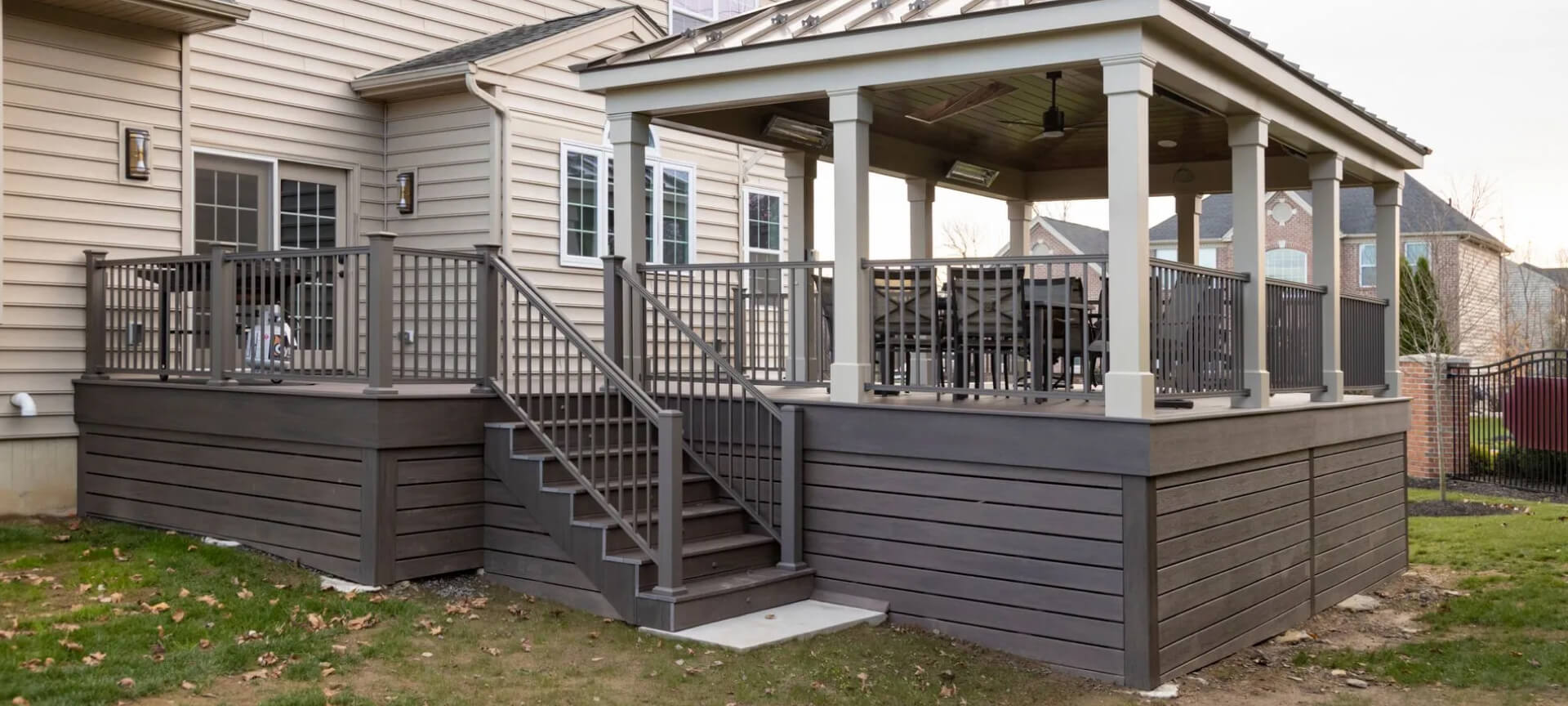
Every deck project starts with the same argument. Someone wants the look of real wood. Someone else does not want to spend a weekend every spring sanding and staining it. Somebody read that composite gets too hot to walk on. Somebody’s brother-in-law swears by cedar.
We build in all three materials across Chester County, Delaware County, and Montgomery County, so we have no reason to sell you one over another. What follows is the composite vs PVC vs wood decking comparison we give clients in person, with the parts the manufacturers leave out.
If you are still working out the shape and size of the project, start with our deck building overview. If you already know you want a deck and just need to pick the boards, read on.
Wood. Usually pressure-treated pine, sometimes cedar, occasionally a hardwood like ipe. It is real, it is warm underfoot, and it is the only material that will ever look like actual timber, because it is actual timber. It also moves. It cups, checks, and splinters, and it demands attention.
Composite. A blend of wood flour and plastic, pressed into a board. Modern composite is “capped,” meaning it has a polymer shell bonded to the outside that resists stains and fading. Uncapped composite from the early 2000s is the reason composite has a bad reputation. Capped composite is a genuinely different product.
PVC. All plastic, no wood fiber. Nothing in it can rot, absorb water, or feed mold, because there is no organic material to feed on. It is the lightest of the three and the most dimensionally stable.
The composite vs PVC vs wood decking debate usually gets framed as plastic versus real. That is the wrong axis. The real question is what you are willing to do to it every year.
Rough installed cost, low to high: pressure-treated wood, then cedar, then composite, then PVC. PVC typically runs the highest per square foot.
But upfront cost is a bad way to choose, and here is why. A pressure-treated deck needs cleaning and re-sealing roughly every two years. Budget for materials, a full weekend, and a sprayer, or budget for a contractor to do it. Over twenty years that recurring cost quietly closes most of the gap with composite.
The cheaper board is not the cheaper deck. It is just the cheaper invoice on day one.
There is a second cost people miss. Composite and PVC generally require 16-inch joist spacing, sometimes 12-inch on a diagonal layout. If you are resurfacing an old frame built at 24 inches on center, you are paying to add framing before a single new board goes down.
This is the complaint we hear most, and it is legitimate.
Dark composite boards in direct July sun get hot. Not mildly warm. Hot enough that a barefoot child will not cross them at 2pm. PVC runs cooler than composite because it is less dense and lighter in color across most product lines, but a dark PVC board in full sun is still no picnic.
Wood stays coolest. Physics, not marketing.
Practical guidance: if your deck faces south or west with no shade and you have kids or dogs, pick a lighter color. The difference between a dark espresso board and a light grey board in the same product line can be significant underfoot. This is the single most common regret we hear, and it is entirely avoidable at the sample stage. Come touch the boards at our showroom on a sunny afternoon before you commit.
Nobody enjoys this section, so let us be blunt.
Wood: clean annually, seal or stain every one to three years depending on exposure. Expect to replace a few boards over the deck’s life. Expect splinters if you skip the sanding.
Composite: wash it. That is essentially the whole program. Capped composite resists stains well, though grease from a grill will still leave a mark if it sits. Mildew grows on the surface film, not in the board, so it comes off with soap and a brush.
PVC: wash it, less often. It is the closest thing to zero maintenance the industry offers. It will not rot, it will not host mold in the board, and it will not feed insects.
One caveat that applies to both synthetics. Neither is scratch-proof. Dragging a steel patio chair leaves a mark on composite and PVC alike, and unlike wood you cannot sand it out. Felt pads, always.
For the full breakdown on the plastic option, we wrote our full PVC decking guide separately.
Standing three feet away, high-end capped composite and PVC look convincingly like wood. Standing on them, they do not feel like it. Synthetics are more uniform, slightly softer, and quieter underfoot.
Wood grain in composite and PVC repeats. Boards come off a die, so the pattern cycles every few feet. Premium lines vary the pattern across multiple board faces to disguise this, and it works reasonably well. Budget lines do not, and once you notice the repeat you cannot unsee it.
Cedar, meanwhile, silvers beautifully if you let it and looks rich if you stain it. Some clients want that patina. Some hate it.
None of this is a reason to pick one over another. It is a reason to look at real boards in real sunlight rather than a website photo. Our portfolio shows all three materials on finished Montgomery County and Chester County homes, and our luxury deck design ideas go deeper on how material choice affects the finished look.
Choose wood if you love the material, you genuinely will maintain it, or the budget is tight and you are prioritizing size over longevity.
Choose composite if you want a low-maintenance deck at a reasonable price and you are willing to be careful about color selection for heat.
Choose PVC if the deck is near a pool, in heavy shade where moisture lingers, or you want the longest service life and the least upkeep. Poolside is where PVC earns its premium outright, because chlorinated water and constant wet feet punish everything else.
Whichever way you go, the framing underneath and the railing and lighting on top matter more than most people expect. A great board on a bad frame is still a bad deck.
They are different categories. Trex is primarily capped composite, Azek is primarily PVC. Azek costs more, runs cooler, and lasts longer. Trex is the value play. Neither is objectively better.
Capped composite fades slightly in the first year, then stabilizes. This is normal and covered by most fade warranties. Uncapped composite from older generations fades badly and unevenly.
Only if the joist spacing and structure allow it. Most older frames need additional joists sistered in. We check this before quoting a custom deck build.
Roughly: pressure-treated wood 10 to 15 years, cedar 15 to 20, composite 25 to 30, PVC 30 or more with proper installation.
PVC, without much argument. It does not absorb water, it resists chlorine, and it stays cooler than dark composite underfoot.
Bring your questions and we will bring the samples. We will tell you which material suits your site, your sun exposure, and your tolerance for weekend chores.
Talk to a deck builder serving Chester County, Delaware County, and Montgomery County.