- About Us
- Contact
- Our Process
- MoreHide

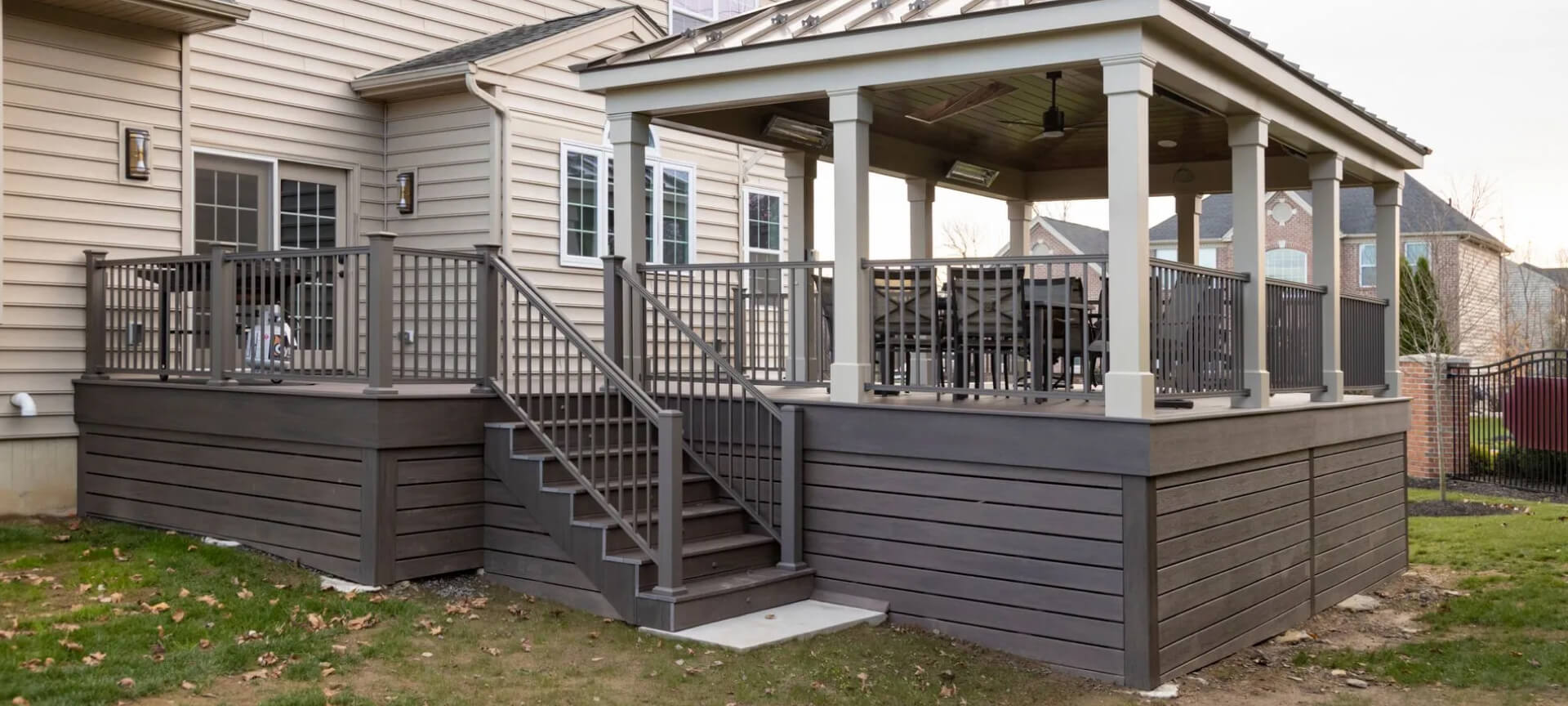
Transforming your backyard into a luxury retreat is more than just a home improvement project—it’s an investment in your lifestyle and your property’s value. In Southeastern Pennsylvania, where the seasons transition from humid summers to freezing winters, the quality of your paver patio installation is the difference between a lifetime of enjoyment and a series of costly repairs.
As a premier hardscape contractor, we understand that a truly great outdoor space blends sophisticated custom hardscape design with rigorous engineering. Whether you are envisioning a sleek, modern porcelain terrace or a rustic natural stone gathering spot, this guide explores everything you need to know about professional patio construction in 2026.
Many homeowners consider a DIY approach to patio building, but the complexities of Pennsylvania’s soil and climate often lead to “sinking patio” syndrome within just a few seasons. Professional installation focuses on the parts you don’t see—the foundation.
The longevity of your patio is dictated by the 6 to 10 inches of material beneath the surface. A professional hardscape contractor ensures proper excavation, geotextile fabric installation to prevent soil mixing, and high-density compaction of modified stone bases. This prevents the shifting and heaving caused by PA’s intense freeze-thaw cycles.
Water is the enemy of any hardscape. Without a calculated pitch (usually 1/8 to 1/4 inch per foot) and integrated drainage systems, water can pool against your home’s foundation or erode the bedding sand beneath your pavers. Expert installers use laser levels to guarantee that every drop of rain flows away from your structures.
In 2026, the trend is moving away from simple “squares of stone” toward multi-functional outdoor living spaces that serve as true extensions of the home.
One of the biggest shifts this year is the move toward oversized pavers (24”x24” or larger). These “slabs” create a sleek, minimalist aesthetic with fewer joint lines, making small backyards feel more expansive and modern.
Why choose just one texture? We are seeing a surge in designs that combine smooth porcelain pavers with rugged natural stone borders, or “floating” pavers separated by decorative gravel or turf. This creates visual “zones” for dining, lounging, and cooking.
With increasing focus on eco-friendly home management, permeable paver patio installation is becoming a top choice. These systems allow rainwater to filter back into the ground rather than running off into storm drains, often qualifying homeowners for local environmental rebates while reducing icing issues in the winter.
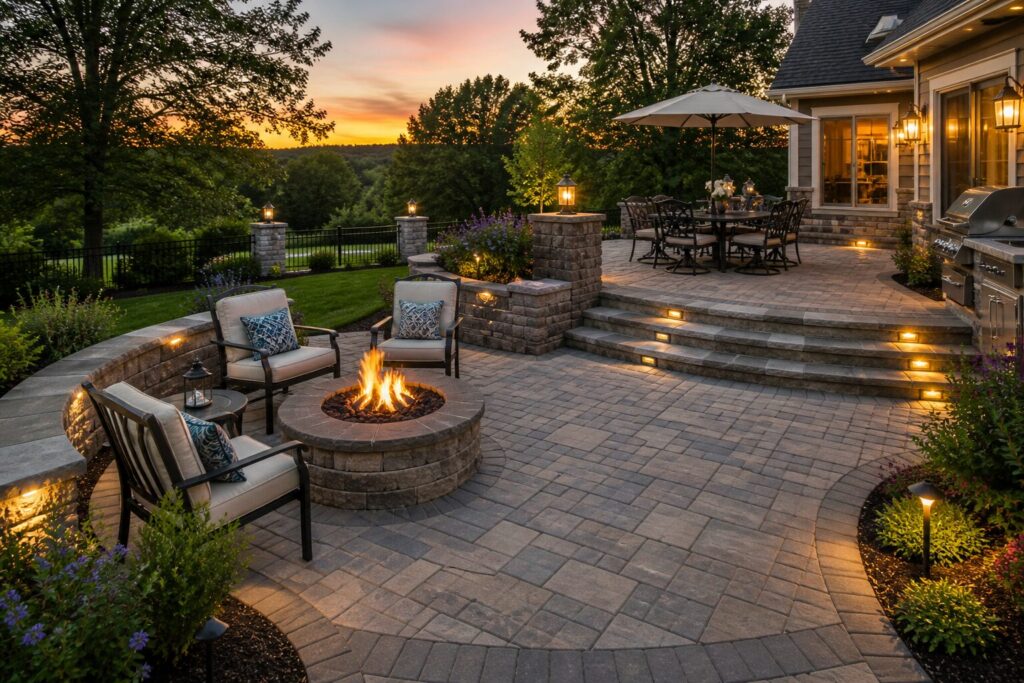
A patio is often just the beginning. To truly unlock the potential of your property, your hardscape contractor should help you integrate “vertical” elements that add dimension and utility.
If your yard is sloped, retaining walls are a functional necessity. However, in a custom hardscape design, these walls also double as “seat walls” around fire pits, eliminating the need for bulky patio furniture and creating a cleaner look.
In 2026, the backyard is the primary entertaining hub. Built-in stone grills, pizza ovens, and gas-powered fire tables are the “must-have” features that extend your patio usage into the cooler months of October and November.
Even the highest quality paver patio installation requires minimal upkeep to stay looking “day-one” fresh.
Polymeric Sand Refills: Every few years, the sand between your pavers may need a touch-up to prevent weed growth and insect nesting.
Sealing: While not always mandatory, a high-quality breathable sealer can protect natural stone from salt damage and enhance the color of concrete pavers.
Power Washing: A light annual cleaning removes organic debris and prevents moss buildup in shaded areas.
Costs vary based on the choice of stone and the complexity of the terrain. While a basic concrete paver patio is more accessible, high-end natural stone or porcelain installations are a premium investment that offers higher ROI on home resale value.
It is possible through a method called “overlaying,” but only if the existing concrete is structurally sound and has no major cracks. Your hardscape contractor will need to evaluate the height of your door thresholds to ensure a safe transition.
For a standard 400–600 square foot patio, the process—from excavation to the final “sweep-in” of polymeric sand—typically takes between 5 and 10 business days, depending on the weather.
A great patio is the foundation of a great life. If you’re ready to stop imagining and start building, it’s time to partner with a team that understands the intersection of art and engineering.
From the first sketch of your custom hardscape design to the moment you light your first fire on your new stone patio, Deck Craft Plus is here to bring your vision to life. Serving Chester, Montgomery, and Delaware Counties, we specialize in high-intent, high-durability outdoor solutions.