- About Us
- Contact
- Our Process
- MoreHide

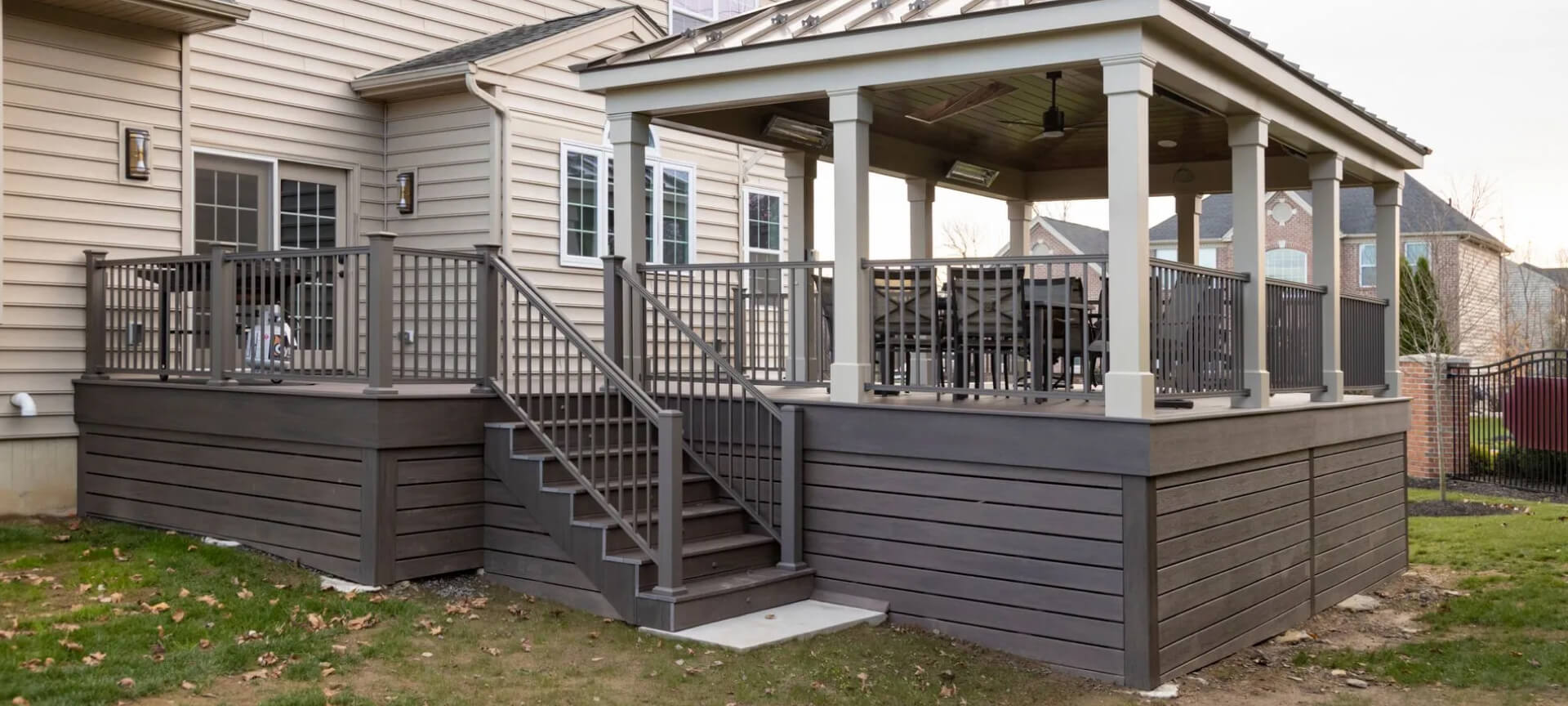
A deck in southeastern Pennsylvania takes a beating that decks in gentler climates never see. Freeze, thaw, freeze again. Wet springs. Humid summers that grow mildew on anything that holds still. Then salt, snow, and shovels.
Deck maintenance here is not optional, and it is not the same job as deck maintenance in Arizona. What follows is the actual schedule we give clients across Chester County, Delaware County, and Montgomery County. It is short, because a maintenance plan you will not follow is worthless.
If you are past the point of upkeep and starting to think about rebuilding, our deck building services are a better place to start than this article.
Everything else on this list is about appearance. This part is about whether your deck falls down.
Once a year, ideally in early spring, do this. Take a screwdriver. Go under the deck if you can, or reach in from the side.
Probe the ledger board where the deck meets the house. Probe the base of each post. Probe the joists near the house and anywhere that stays shaded and damp. Sound wood pushes back. Rotted wood takes the screwdriver like styrofoam.
Then grab each railing post and pull it toward you, hard. It should not move. If it does, that is not a maintenance issue anymore, it is a safety issue, and it needs deck repair now rather than next season.
Check the fasteners. Look for rust stains bleeding out of screw heads, which means the fastener is failing inside the wood. Look for popped nails, which mean the framing is moving.
Ten minutes, once a year. It is the highest-value thing in this entire guide.
Wood is the demanding one. There is no way around that.
Clean it every spring. Sweep off the winter debris first, especially the leaves that packed into the gaps and turned to sludge. Then wash with a deck cleaner and a stiff brush.
Do not reach for the pressure washer. Or if you must, keep it under 1,500 PSI, use a fan tip, and stay a foot away. Pressure washers destroy more wood decks in this region than weather does. They blast out the soft spring growth between the grain lines and leave the surface furry, which then holds water, which then rots.
Seal or stain every one to three years. Exposure decides the interval. A deck in full sun on a south-facing wall in Delaware County needs it more often than a shaded deck in Chester County. The test is simple: sprinkle water on the boards. If it beads, you are fine. If it soaks in and darkens the wood, it is time.
Do it on a dry stretch. Two dry days before, two dry days after. Applying sealer to damp wood traps moisture inside the board, which is precisely the outcome you are trying to prevent.
Sand the splinters. Anywhere bare feet go, especially stair treads and the railing cap. A pole sander and an afternoon.
This is the easy section, which is why people buy these materials.
Wash twice a year with soap, water, and a soft-bristle brush. That is the core program.
A few things people get wrong. Mildew still grows on composite. It grows on the surface film of dirt and pollen, not in the board, so it comes off with cleaning. If you let that film build up for three years, you will get black spotting and you will blame the boards.
Never use a wire brush or an abrasive pad. You will scratch the cap, and unlike wood, it does not sand out.
Grease is the one real enemy. Put a mat under the grill. A dropped burger will leave a shadow on capped composite if it bakes in the sun for a week.
PVC decking is even more forgiving, because there is no wood fiber in it at all. Same routine, less urgency.
This is where Pennsylvania decks earn their damage.
Shovel with plastic, never metal. A steel shovel blade gouges composite and shreds wood. Push with the grain, along the boards, not across them.
Skip the rock salt. Sodium chloride is corrosive to fasteners and hard on wood fibers. Calcium chloride is somewhat better. Sand or a poly-safe ice melt is better still.
Do not leave a snow pile all winter. Standing snow means standing water for months, and that is how the freeze-thaw cycle pries boards apart.
Move the furniture and the planters. A planter that sits in one spot for five months creates a permanently wet ring underneath it. We have pulled up boards with a perfect rotted circle where a pot lived. If a covered patio is in your future, it solves a lot of this permanently.
There is a point where you are maintaining a problem instead of preventing one.
If you are replacing boards every year, if the frame has soft spots, if the railings will not stay tight, you are past maintenance. Adding another coat of sealer to a rotting deck is like painting over mold.
That is the honest moment to price out a new custom deck and compare it to what you are spending in time and money to keep the old one upright. Sometimes maintenance wins. Sometimes it does not, and we will tell you which. That transparency is central to how we work.
Upgrading the railings and lighting during a rebuild also tends to be the moment homeowners realize how much they had settled for.
Every one to three years for wood, depending on sun and rain exposure. Use the water bead test rather than the calendar. If water soaks in instead of beading, it is time.
Lightly, under 1,500 PSI with a fan tip, held at least a foot back. Most composite manufacturers permit it but restrict the pressure. Soap and a soft brush is genuinely better and safer.
Late April through May. The freeze-thaw cycle is done, pollen has mostly dropped, and you get dry stretches long enough for sealing to cure properly.
No. Tarps trap moisture against the boards and cause more rot than they prevent. Keep it clear of snow and debris instead.
Yes, just far less. Twice-yearly cleaning prevents the surface mildew and staining that people mistakenly blame on the material itself.
Ten minutes with a screwdriver tells you a lot. A trained eye tells you more.
Book an inspection and we will give you a straight assessment of what your deck needs, whether that is a weekend of cleaning or a serious conversation. Serving Chester County, Delaware County, and Montgomery County.