- About Us
- Contact
- Our Process
- MoreHide

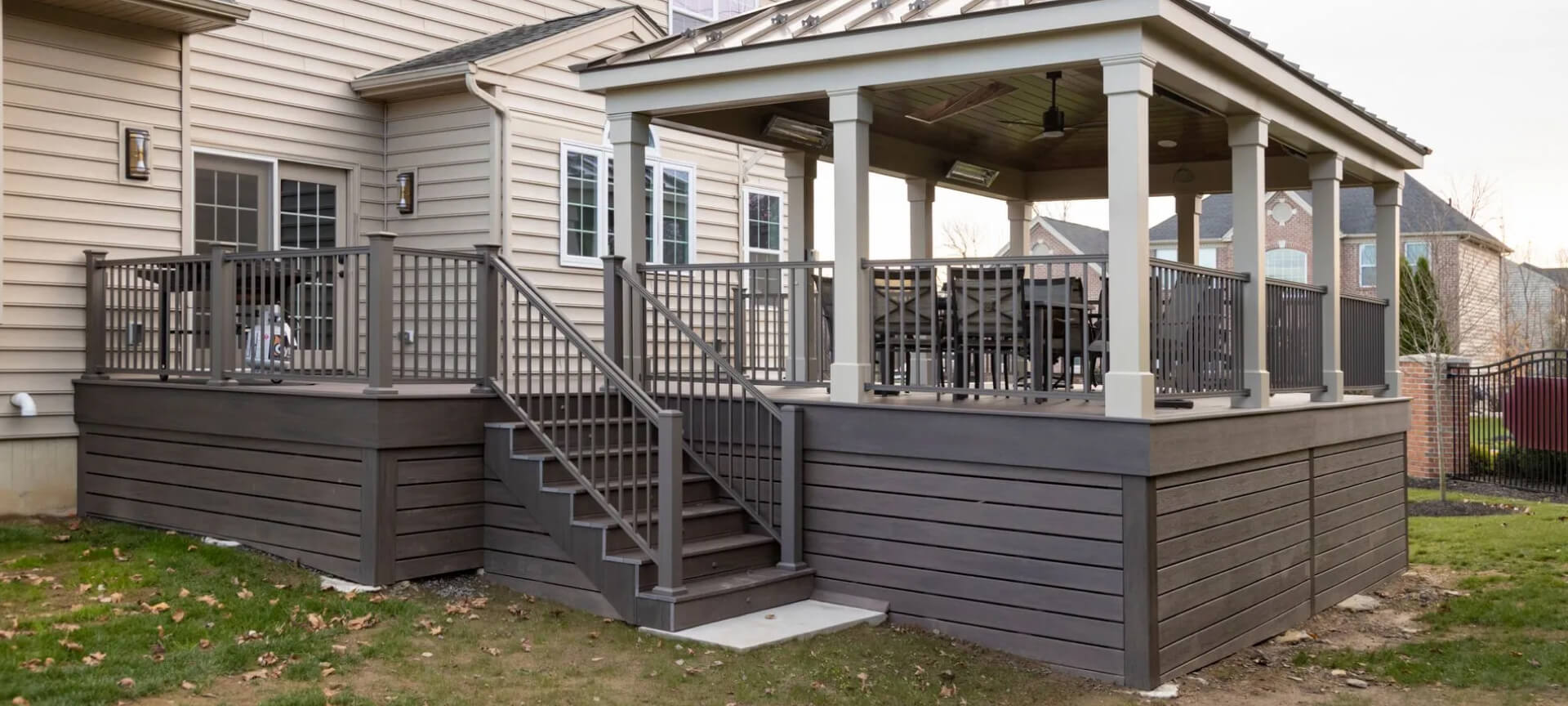
Most homeowners call us about deck repair after something scares them. A board flexes underfoot. A railing wobbles when a kid leans on it. Someone notices a dark stain spreading near the ledger board and decides not to ignore it anymore.
That instinct is right. Decks fail slowly, then all at once. The good news is that a lot of what looks catastrophic is fixable, and a lot of what looks cosmetic is not. Knowing the difference is the whole job.
Deck Craft Plus handles deck repair across Chester County, Delaware County, and Montgomery County, and we do it as an extension of our deck building services, not as a side hustle. Same crews. Same standards.
After enough inspections, the pattern gets predictable.
Rot at the ledger board. This is the one that matters. The ledger is the board bolted to your house, and it carries a huge share of the deck’s load. Water gets behind improper flashing, sits there, and quietly turns framing lumber into sponge. You will not see it from the surface. You find it by probing the wood with a screwdriver near the house and watching how far it sinks.
Failing joists. Below the decking, the joists take the abuse. In older pressure-treated frames around Chester County, we routinely find joists that look fine on top and are soft on the bottom edge where moisture pools.
Loose or undersized railings. Pennsylvania code wants a guardrail on a residential deck to resist 200 pounds of lateral force at any point. Plenty of decks built fifteen years ago do not come close, especially where the posts were simply lag-bolted to the rim joist.
Surface damage. Cupped, splintered, or cracked boards. Annoying, ugly, and usually the least urgent thing on the list.
Homeowners tend to call about the fourth one. We usually find the first one while we are up there.
Here is the honest math, and it is not always in our favor to say it.
If the frame is sound and the problem is the surface, repair. Replacing boards on a solid substructure is straightforward and cost-effective. You can even swap wood decking for composite and get a decade of low-maintenance life out of a frame you already own.
If the frame is compromised, stop. Once the ledger, the posts, or more than a handful of joists are rotting, deck repair becomes a game of chasing failure from one board to the next. We have watched homeowners spend three thousand dollars patching a deck that needed to come down, then spend the real money eighteen months later anyway.
Our rule of thumb: when repair costs approach half of a rebuild, build new. At that point you are buying a warranty, current code compliance, and a design you actually want instead of buying two more seasons on a structure you already dislike. If you land there, our custom deck work starts from scratch with proper flashing, hidden fasteners, and framing that will outlast the decking on top of it.
Not sure which side of the line you are on? That is what the inspection is for, and we will tell you plainly.
Resurfacing means keeping the existing frame and replacing everything you can see. Boards, railings, stair treads, fascia.
It works when three things are true. The joists are sound and spaced correctly for the new material. The posts and footings are stable. And the ledger connection is properly flashed, or can be corrected without tearing out the deck.
Composite and PVC have a spacing requirement that catches people. A lot of older wood decks were framed at 24 inches on center, which is fine for five-quarter wood but too wide for most composite lines, especially on a diagonal layout. If that is your situation, we sister in additional joists to bring the spacing to 16 inches. It adds cost. It also prevents the soft, bouncy feel that makes a new composite deck feel cheap.
For a sense of what a resurfaced deck can become, take a look at our luxury deck design ideas. Many of those started as tired frames.
A wobbly deck railing is not a nuisance. It is the single most likely part of your deck to injure someone.
The failure is almost always at the post connection. Bolting a 4×4 post to the outside of a rim joist creates a lever, and every lean, every hip-check, every kid using it as a launch pad works that connection loose. Modern practice uses tension hardware that ties the post back into the framing rather than relying on the bolt in shear.
We repair railings by fixing the connection first, not by tightening the bolt and hoping. If the existing posts cannot be salvaged, we replace them and give you the option to upgrade to cable, aluminum, or glass while we are already in there.
We will not pretend to give you a number without seeing the deck, but we can give you honest ranges.
Small repairs, meaning a handful of boards and a railing reinforcement, typically land in the low four figures. Resurfacing an average-sized deck with composite runs meaningfully higher because material is the bulk of the cost. Structural work on the ledger or joists sits in between and varies most, because you never know exactly how far the rot traveled until you open it up.
What we can promise is that we will not discover a surprise on day three and hand you a new invoice. We scope thoroughly, we tell you what we find, and we price it before we start. That approach is baked into our process, and it is the reason most of our work comes from referrals.
For larger repairs and full rebuilds, financing options are available.
Most surface repairs finish in one to three days. Resurfacing an average deck takes about a week. Structural repair depends entirely on what we find once the decking comes up, which is why the inspection matters so much.
Yes. Framing and board replacement work fine in cold weather across Chester County and Delaware County. Staining and sealing do not, so we schedule those for spring.
Sometimes, when the damage is sudden, like a fallen tree limb. Gradual rot and normal deterioration are almost never covered. Check your policy, but do not count on it.
Press a screwdriver into the underside of the joists near the house and near any spot that stays damp. Sound wood resists. Rotted wood accepts the tip with almost no pressure.
If the frame is solid, repair or resurface. If the ledger or multiple joists are failing, replace. Our free inspection gives you a straight answer either way, along with the numbers behind it.
Stop wondering whether that soft spot is serious. We will come out, probe the framing, check the railings, and tell you exactly where your deck stands. No pressure, no upsell.
Schedule a free inspection with Deck Craft Plus. You can also see our past projects to get a feel for the work.